Full and partial rewires for homes and renovations, done with as little mess and disruption as we can manage — and fully certified when we're done.
Not every property needs everything replacing — we'll tell you honestly which one yours actually needs.
Every circuit in the property is replaced — sockets, lighting, and the consumer unit. The right choice for older properties where the whole installation is dated or unsafe.
Only specific circuits or areas are replaced — one floor, a kitchen extension, or a single problem circuit — while sound existing wiring is left in place.
If any of these sound familiar, it's worth getting it looked at.
Round-pin sockets or a mix of old and new socket styles
A fusebox with rewireable fuses instead of modern circuit breakers
Frequent tripping or fuses that blow regularly
Warm sockets or switches, or a burning smell near an outlet
Visible fabric or rubber-insulated cable rather than modern plastic sheathing
No rewiring since before the 1980s, or an EICR that's come back Unsatisfactory
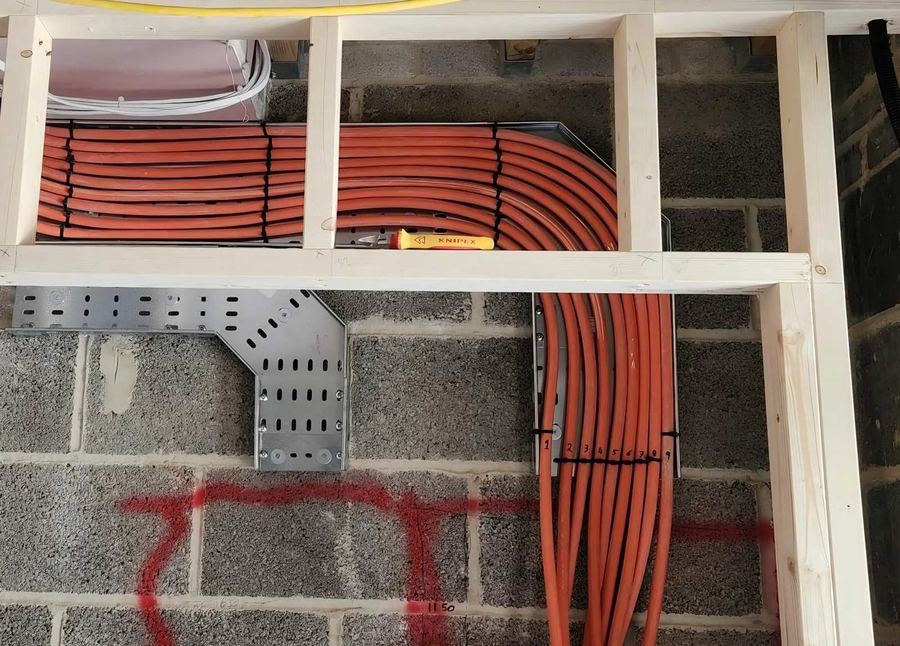
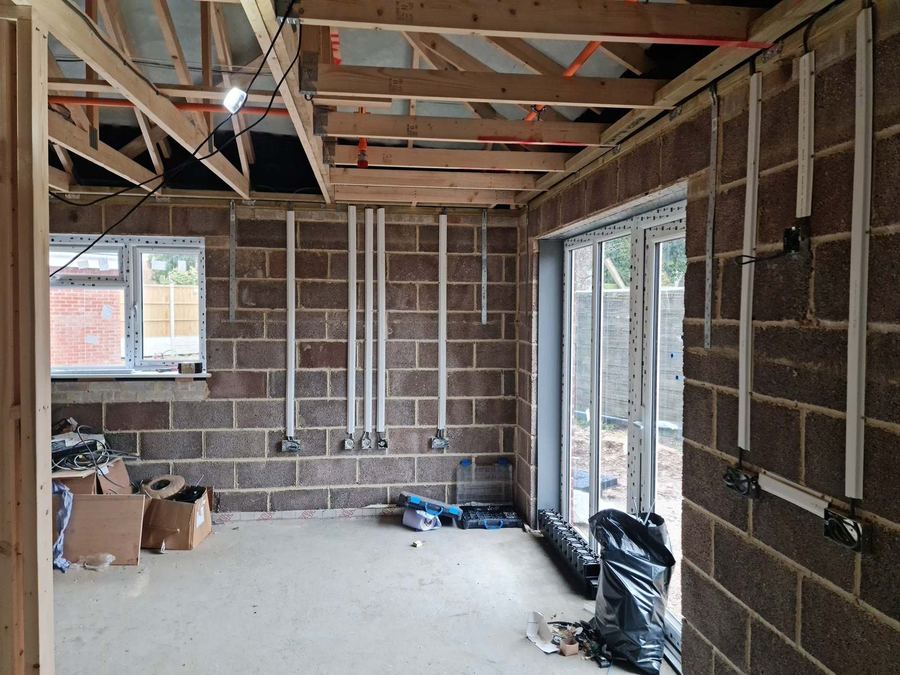
New cabling is run under floors, through walls and ceilings, and back to the consumer unit. This is the dusty, disruptive part — we protect floors and furniture with dust sheets throughout.
Sockets, switches, and light fittings go on, and the new consumer unit is installed and connected.
Every circuit is tested before we hand over an Electrical Installation Certificate (EIC) confirming the work meets BS 7671.
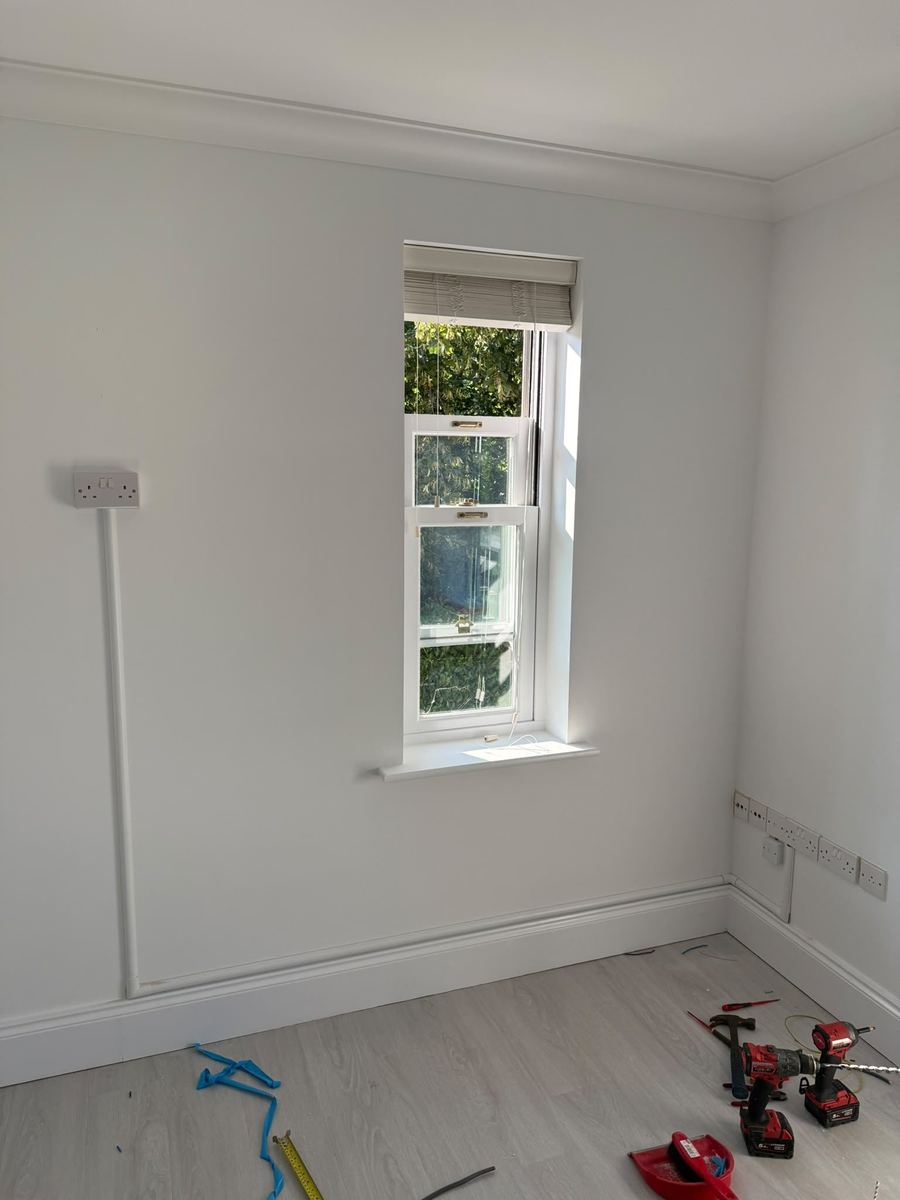
We're electricians, not plasterers — we'll leave any chased walls ready for a decorator, and clear away our own mess as we go.
Rewiring a home is notifiable work under Part P of the Building Regulations — meaning it legally has to be signed off, either by your local council's building control team or by an electrician registered with a competent person scheme.
We're NICEIC registered, which means we self-certify the work ourselves. You don't need to contact building control separately or pay an extra fee — we issue your Electrical Installation Certificate (EIC) as part of the job, and it's the document you'll need if you ever sell the property.
Every property is different — the figures below are a starting point, not a fixed quote.
Priced on the circuits or area involved.
Standard 2–3 bedroom property.
Common signs include round-pin sockets, a fusebox with rewireable fuses instead of circuit breakers, frequent tripping, sockets that feel warm, flickering lights, or wiring you can see is wrapped in fabric or rubber rather than modern plastic. If your property hasn't been rewired since before the 1980s, it's worth having it checked.
A full rewire replaces every circuit in the property — sockets, lighting, and the consumer unit. A partial rewire only replaces specific circuits or areas, such as one floor or a kitchen extension, while leaving sound existing wiring in place.
A full rewire on an average 3-bedroom house typically takes 4–6 days. It's dusty work since cables run under floors and behind walls, but we use dust sheets throughout and make good the immediate area we've worked in before we leave.
Rewiring is notifiable work under Part P of the Building Regulations, but because we're NICEIC registered, we self-certify the work ourselves. You don't need to contact building control or pay a separate fee — we handle the certification as part of the job.
Tell us about your property and we'll arrange a visit to scope the job properly before quoting.
Request Your Rewire Quote